
Why Are Bees in My Dog’s Water Bowl?

Bees in your dog’s water bowl are there because they need water, especially during the hot Las Vegas summer. Like everything on our planet, they need water too.
Honey bees collect water and carry it back to the colony, where it can be used to help cool the hive and support other colony needs. When temperatures climb and natural water sources dry up, a dog bowl becomes a dependable puddle that refills itself, which in this climate is worth more to a bee than most people realize.
If you suddenly notice several bees drinking from your dog’s outdoor water bowl, there is usually no reason to panic. The bees are not necessarily interested in your dog, and their presence does not automatically mean you have a bee hive on your property.
However, there are some important things every dog owner should know.
Why Are Bees Drinking From My Dog’s Water Bowl?
Honey bees need water just like other living creatures, but water plays an especially important role inside a honey bee colony.
During hot weather, worker bees collect water and bring it back to the hive. The colony can use that water for evaporative cooling. Bees distribute water inside the hive and use their wings to create airflow, helping regulate the temperature around the brood.
Research has shown that honey bee colonies can dramatically increase their water collection when the brood nest becomes overheated.
That is why you may notice a sudden increase in bees around water during a Las Vegas heat wave.
A dog’s water bowl is particularly attractive because it provides a reliable source of water that may be available every day. In a desert environment like Las Vegas, that can be extremely valuable to a bee colony.
Why Did the Bees Suddenly Start Coming to the Bowl?
This is one of the most common questions homeowners ask.
You may have had the same dog bowl outside for months without seeing a single bee. Then, seemingly overnight, dozens of bees appear. There are several possible reasons.
The weather got hotter
As temperatures rise, honey bees need more water for colony temperature regulation.
A natural water source disappeared
A small puddle, irrigation leak, plant saucer, fountain, or other water source may have dried up. The bees then have to find another source.
The colony discovered your yard
Bees are better at finding a reliable water source than most people are at remembering to water their own plants, and once they've found one, they don't forget it.
The colony is nearby
If the same bees are showing up at the same bowl every afternoon, there's a colony somewhere within flying range that has put your yard on its regular route.
That doesn't mean the hive is on your property. Bees will travel a fair distance for a resource worth having.

Are the Bees Actually Drinking the Water?
Yes. Worker bees collect water and carry it back to the colony.
A bee may land on the edge of the bowl, take in water, and then return to the hive.
Interestingly, honey bees can sometimes prefer water sources that do not look particularly clean to us. Water containing minerals and other substances can be attractive to them.
That is one reason simply replacing the bowl with perfectly clean water does not always solve the problem.
Is It Dangerous for My Dog to Drink From a Bowl With Bees?
Bees drinking calmly from the edge of a bowl are not a threat. The risk shows up when a dog decides to get involved, pawing at the water, snapping at a bee, or stepping on one without noticing.
A honey bee stings to defend itself, not because it woke up looking for a fight, and a dog crashing through a cluster of them tends to be the thing that starts it.
If it's one or two bees taking turns at the edge, your dog can probably still drink. If the bowl is covered, move it.
This isn't a standoff you need your dog to win. Give them water somewhere else while you sort out the bees, and don't feel like you're choosing between your dog's hydration and the bee colony's water supply. You can solve for both.
Can Bees Sting My Dog?
Yes. Honey bees can sting dogs just as they can sting people.
A bee generally does not want to sting your dog simply because your dog is nearby. Stinging is a defensive behavior.
The risk increases if your dog paws at the bowl, snaps at the bees, tries to eat them, or accidentally crushes one.
For that reason, I would avoid allowing a dog to drink directly through a large cluster of bees.
Will the Bees Attack My Dog?
Usually, bees visiting a water source are focused on collecting water and returning to the colony. They are not at the water bowl looking for a fight.
Extension experts note that honey bees collecting water generally behave differently from yellow jackets around food. Water-collecting bees are typically focused on gathering water and returning to their colony.
If you suspect a hive is nearby, do not disturb it. A few bees calmly drinking from a bowl is very different from hundreds of bees flying aggressively around a location where a colony is established.
Can My Dog Still Drink the Water?
If there are only an occasional bee or two, your dog may be able to drink without a problem.
If the bowl is covered with bees, I recommend moving your dog's drinking water to another location. You should not have to choose between keeping your dog hydrated and giving bees access to the bowl.
Give your dog a clean water source in a location where bees are not concentrated.
What Should I Do If Bees Are Taking Over My Dog’s Water Bowl?
The first thing I would do is move your dog's water bowl.
Don't swat at the bees, spray them with insecticide, or pour chemicals into the water. Instead, move the dog bowl to another location and provide your dog with fresh water.
If the bees continue following the bowl, move it again. Once honey bees have established a reliable water source, simply moving the bowl a few feet may not be enough. They may continue searching the original location.

Should I Give the Bees Their Own Water Bowl?
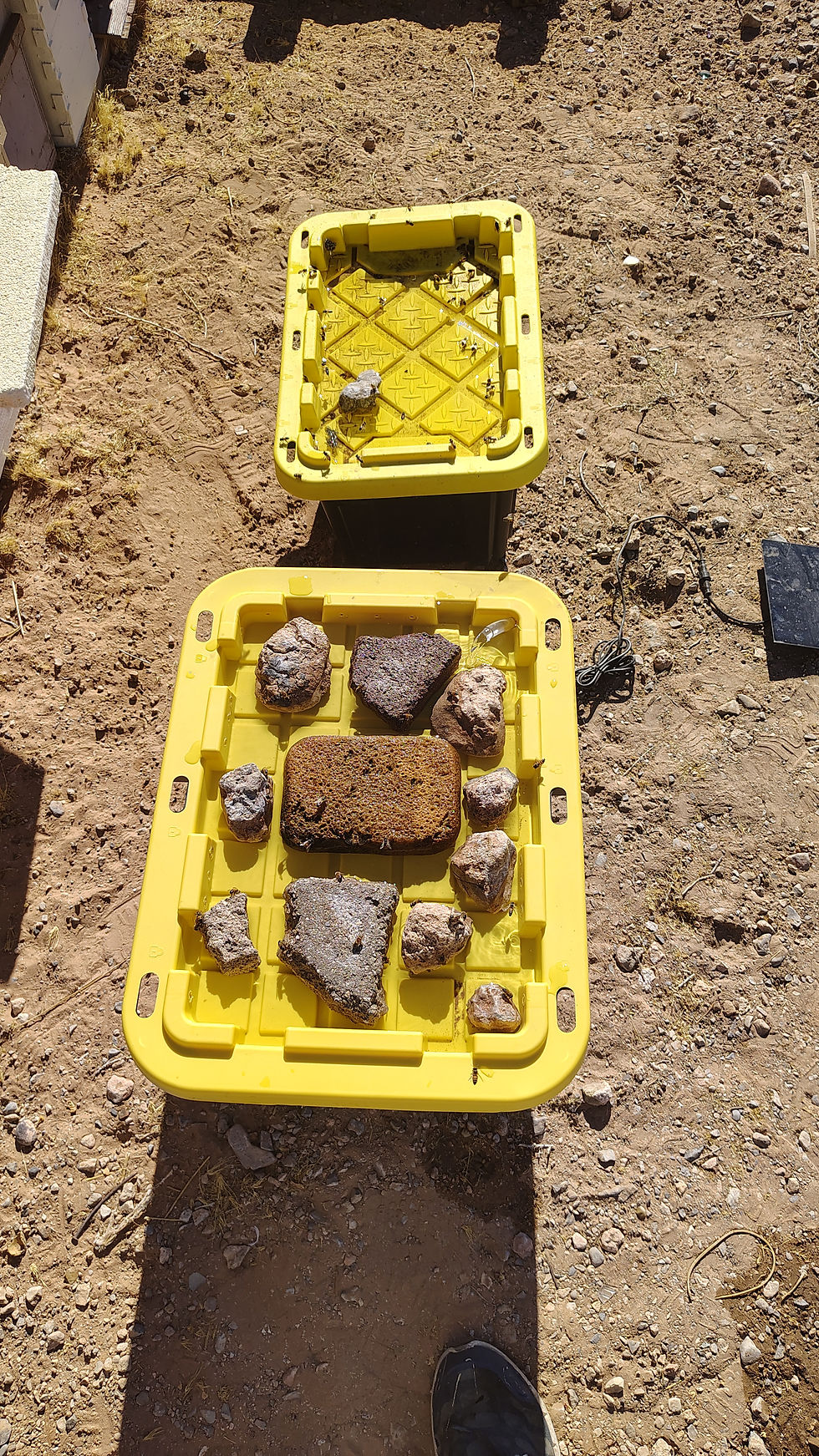
Yes, this can be an excellent way to help solve the problem. Instead of trying to eliminate the bees' access to water, give them a safer water source that is separate from your dog's drinking bowl.
A shallow container can work well. Add rocks, pebbles, sticks, or another safe landing surface so bees can reach the water without falling into a deep container. Honey bees will drown in open water.
Our research making bee watering stations found that purpose-built water sources can reduce drowning risks compared with some natural water sources.
How Do I Make a Bee Watering Station?
A simple bee watering station can consist of:
A shallow container
Clean water
Small rocks or pebbles
A safe place for bees to land
Fill the container so that the rocks extend above the water. The bees should be able to stand on the rocks while drinking.
Do not create a deep pool of water where bees can easily fall in. I would also keep the bee water station separate, and far, from your dog's water bowl.

Where Should I Put the Bee Water Station?
If you're trying to encourage the bees to use a different water source, place it somewhere away from your dog's normal drinking area. You want to create a predictable alternative.
Once bees discover a dependable water source, they may continue returning to it.
I would also choose a location where people and pets are less likely to disturb the bees.
Should I Put Sugar in the Water?
No. If bees are looking for water, give them water.
You don't need to make sugar water for bees that are simply collecting water.
Sugar water can also create additional problems, including attracting other insects. A simple water source is the better choice.
Should I Add Salt to the Water?
You may hear beekeepers recommend mineralized or slightly salty water because honey bees sometimes seek out water containing minerals.
However, I would not put salt into the water. If you are creating a separate bee watering station, plain water is the simplest place to start.
Your goal is to provide the bees with a safe alternative, not to create another problem for your pets.
Why Are Bees Attracted to Dirty Water?
Honey bees don't necessarily prefer the cleanest-looking water. They may collect water from puddles, damp soil, ponds, birdbaths, irrigation areas, and other sources.
Some water sources contain minerals and other substances that bees appear to find attractive.
That is one reason a freshly filled dog bowl doesn't always win the competition.
A bee may ignore perfectly clean water and go straight to a muddy puddle.

Can Bees Drown in a Dog Water Bowl?
Absolutely. This is one of the biggest problems with open pet bowls.
A bee may land on the water, lose its footing, and become trapped. If the sides are smooth, it may not be able to climb back out.
Adding a large rock, floating cork, stick, or other stable landing surface can give a bee a way to get out.
However, I would not modify your dog's bowl in a way that creates a choking hazard or interferes with your dog's ability to safely drink. A separate bee water station is usually the better option.
Will Moving My Dog’s Bowl Make the Bees Leave?
It may help, but it is not guaranteed to work immediately. Honey bees are remarkably good at remembering profitable resources.
If a group of bees has been visiting the bowl repeatedly, moving the bowl may cause them to search the original location.
This is why creating an alternative water source can be more effective than simply moving the bowl a few feet.
Should I Move the Dog Bowl Inside?
If practical, yes. Moving your dog's water inside is one of the simplest ways to prevent bees from using it. But not every dog owner can keep a water bowl indoors all day.
If your dog needs an outdoor water source, move the bowl to a different location and consider providing the bees with their own water source farther away from the dog's normal area.
What If Bees Follow the Bowl?
If the bees continue showing up after you move the bowl, don't panic.
They may simply be returning to the location they learned as their water source.
Give them another dependable source of water. If the bee activity remains heavy, that is when I would start asking a different question: Where is the colony?
Does a Lot of Bees at My Dog Bowl Mean I Have a Hive?
Not necessarily. Bees can travel from a nearby colony to collect water.
However, a large and persistent number of honey bees visiting your property can be a clue that a colony is established somewhere nearby.
Look around your property for unusual bee activity.
Pay particular attention to:
Wall voids
Roof areas
Attics
Trees
Utility boxes
Block walls
Eaves
Sheds
Outdoor structures
Irrigation areas
Cracks and openings where bees may be entering
If you see bees repeatedly flying into and out of one particular opening, don't seal it. You may have a colony inside.
Does a Hive Nearby Make Bees More Likely to Visit My Dog Bowl?
Yes. If a colony is close to your property, worker bees have less distance to travel to find water.
A reliable water source can become part of the colony's regular foraging route.
That's why you may see the same bees returning to the same bowl day after day.
Are These Honey Bees or Wasps?
Honey bees and wasps are not the same.
If you see bees calmly landing around the water and flying away, honey bees may be collecting water.
Wasps and yellow jackets can also be attracted to water, particularly around pools and other damp areas, so identification matters.
If you are not sure what you are seeing, take a photograph from a safe distance.
Don't get close to a suspected hive just to get a better picture. Email it to us and we will identify it for you.
Will the Bees Become Aggressive Because My Dog Is Near Them?
Simply having a dog nearby does not automatically make honey bees aggressive.
The bigger concern is disturbance.
A dog running through a concentrated group of bees, pawing at the water bowl, barking directly at a hive, or repeatedly disturbing bees can increase the chance of stings.
If you know there is a colony nearby, keep pets and children away from the area.
What If My Dog Gets Stung?
If you know your dog has been stung, watch your dog closely.
A single sting may cause localized pain and swelling. Multiple stings can be more serious.
If your dog has trouble breathing, develops significant swelling, becomes weak, collapses, vomits repeatedly, or shows other signs of a serious reaction, contact a veterinarian immediately.
Do not give your dog human medications unless your veterinarian has specifically instructed you to do so.
Should I Kill the Bees Around the Dog Bowl?
No. If the bees are simply collecting water, killing them does not address the reason they are there. They need water.
A better approach is to manage the water source and protect your dog.
Providing a separate, safer water source can help redirect the bees.
If there is an established colony on your property, the situation is different. In that case, professional bee removal may be appropriate.
Should I Spray the Bees?
I would not recommend spraying bees simply because they are visiting your dog's water bowl. Spraying individual bees doesn't solve the underlying problem. It can also create unnecessary pesticide exposure around your pets and property.
Research on honey bee water collection has highlighted concerns about bees obtaining water from contaminated sources, which is another reason providing a clean alternative can be beneficial.
If you have a colony inside a structure, don't spray the entrance and don't seal the opening yourself. That can create a much bigger problem.
What If There Are Hundreds of Bees?
That's different from seeing a few bees at the bowl.
If hundreds of bees are concentrated around one area, especially if they are flying in and out of a wall, tree, roof, shed, or other structure, stop investigating and keep your pets and family away. There may be a colony nearby.
A large concentration of bees does not mean you should panic, but it does mean you should treat the situation seriously.
Can Bees Coming to the Dog Bowl Mean There Is a Swarm Nearby?
Possibly, but water foraging alone does not prove there is a swarm. A swarm is a temporary cluster of bees associated with a colony's reproductive process.
A colony established inside a wall, tree, attic, or other cavity is different.
If you see a cluster of bees hanging from a tree branch or other exposed location, that may be a swarm.
If you see bees disappearing into a hole in your house, wall, tree, or structure, you may be dealing with an established colony.

Why Are Bees Especially Interested in Water During Las Vegas Summers?
Las Vegas presents a particularly challenging environment for bees.
The combination of extreme summer temperatures, intense sunlight, low humidity, and limited natural water can make reliable water sources extremely valuable.
When temperatures rise, honey bees collect water to help regulate conditions inside the colony. Scientific research has demonstrated that water collection increases when the brood nest experiences heat stress.
That means your dog's water bowl can suddenly become extremely attractive during the hottest part of the year.
What looks like a simple bowl of water to you can be an important resource to a colony.
How Can I Keep Bees Away From My Dog’s Water Bowl?
The most practical approach is to separate the bees' water source from your dog's water source.
We recommend:
Move your dog's water bowl.
Keep fresh water available for your dog.
Establish a separate bee water station.
Make the bee station shallow and provide landing surfaces.
Keep pets away from concentrated bee activity.
Avoid spraying or killing the bees.
Watch for signs of a nearby colony.
Contact a professional if you find an established hive.
The goal is not necessarily to eliminate every bee from your yard.
The goal is to keep your dog safe while giving the bees another place to get the water they need.
Should I Stop Leaving Water Outside for My Dog?
No. Never let your dog go without adequate water just because bees are visiting the bowl.
Your dog's hydration comes first. Instead, change the location or setup of the water source.
During a Las Vegas summer, outdoor pets need reliable access to fresh water.
If bees are making that difficult, solve the bee problem without compromising your dog's access to water.
What About Pools?
Pools can also become water sources for honey bees. If bees are visiting your swimming pool, the same basic principle applies.
The bees are usually looking for water, not trying to bother swimmers.
However, bees can drown in pools, and people can accidentally disturb them.
If you have heavy bee activity around your pool, a separate bee watering station may help redirect some of the traffic.

What About Sprinklers and Drip Lines?
Bees can also find water around irrigation systems. Leaking irrigation lines, damp soil, sprinkler overspray, plant saucers, and condensation can all provide water.
In a desert environment, even small amounts of accessible moisture can attract insects.
If your dog bowl is only one of several water sources around your property, eliminating the bowl may not completely eliminate bee activity.
How Long Will the Bees Keep Coming?
There isn't a guaranteed number of days. As long as the bees need the water and consider your property a reliable source, they may continue visiting. Hot weather always increases the demand for water.
When temperatures change or another water source becomes more attractive, the activity may decrease. A dependable alternative water source can help redirect them.
Does Seeing Bees at the Water Bowl Mean I Have a Bee Problem?
Not necessarily. We would consider a few bees visiting a water bowl a normal part of living in an environment where honey bees are present.
The situation becomes more concerning when:
Bee numbers are rapidly increasing.
Bees are entering a structure.
Bees are entering a wall or roof.
Bees are gathering around a particular opening.
Bees are swarming around people or pets.
Your dog cannot safely access its water.
You find an established hive.
That's when we would stop treating the situation as simply a water-bowl issue.

What Should I Do If I Find a Hive?
Don't seal the entrance, spray the opening,, pour chemicals into the cavity, knock on the wall, or try to remove the bees yourself.
Keep children and pets away from the area and contact a qualified bee removal professional.
An established colony inside a structure needs to be handled differently from a few bees collecting water.
A professional can determine whether you're dealing with a swarm, an established colony, or simply foraging bees.
The Bottom Line for Las Vegas Dog Owners
If bees are drinking out of your dog's water bowl this summer, it's not personal and it's not a sign that something has gone wrong in your yard.
It means you've got water in a place that doesn't have much of it. Move the bowl, give the bees somewhere better to go, and keep an eye out for the difference between a few thirsty foragers and an actual colony that's decided to move in.
Most of the time, it's just bees doing what bees do in the desert. Occasionally, it's more than that, and that's when you call someone who does this for a living.
At Vegas Bees, we rescue honey bee colonies instead of exterminating them. If you have bees around your dog's water bowl and you're concerned there may be a hive nearby, we can help you figure out what you're dealing with.
Betsy & Pete
🐝 Las Vegas’s All-Natural Live Bee Removal Team
About Us: The Authors

We’re Betsy Lewis and Pete Rizzo - Beekeepers on a Mission in Las Vegas
We’re not just in the bee business, we’re in the bee-saving business.
Trained by a master beekeeper and backed by hundreds of successful removals, we are dedicated to rescuing and relocating honey bees with care and precision.
Every swarm we save and every hive we manage reflects our deep love for the bees.
Why Vegas Bees? Because We Never Stop Learning or Caring
Beekeeping is always evolving, and so are we. We stay on the cutting edge by continuing our education, connecting with fellow beekeepers, and refining our beekeeping practices and techniques to ensure the best outcomes for both bees and people.
Whether it’s advanced bee removal strategies or the latest natural methods, we’re always one step ahead.
We’re also proud to support the beekeeping community with high-quality beekeeping supplies for everyone.
If you’re ready to suit up and start your journey, we’ve got what you need. Wanna become a beekeeper? Read our Beekeeping for Beginners Guide.


