
Honey Bees: The Workforce Behind California Almonds
Updated: Feb 15
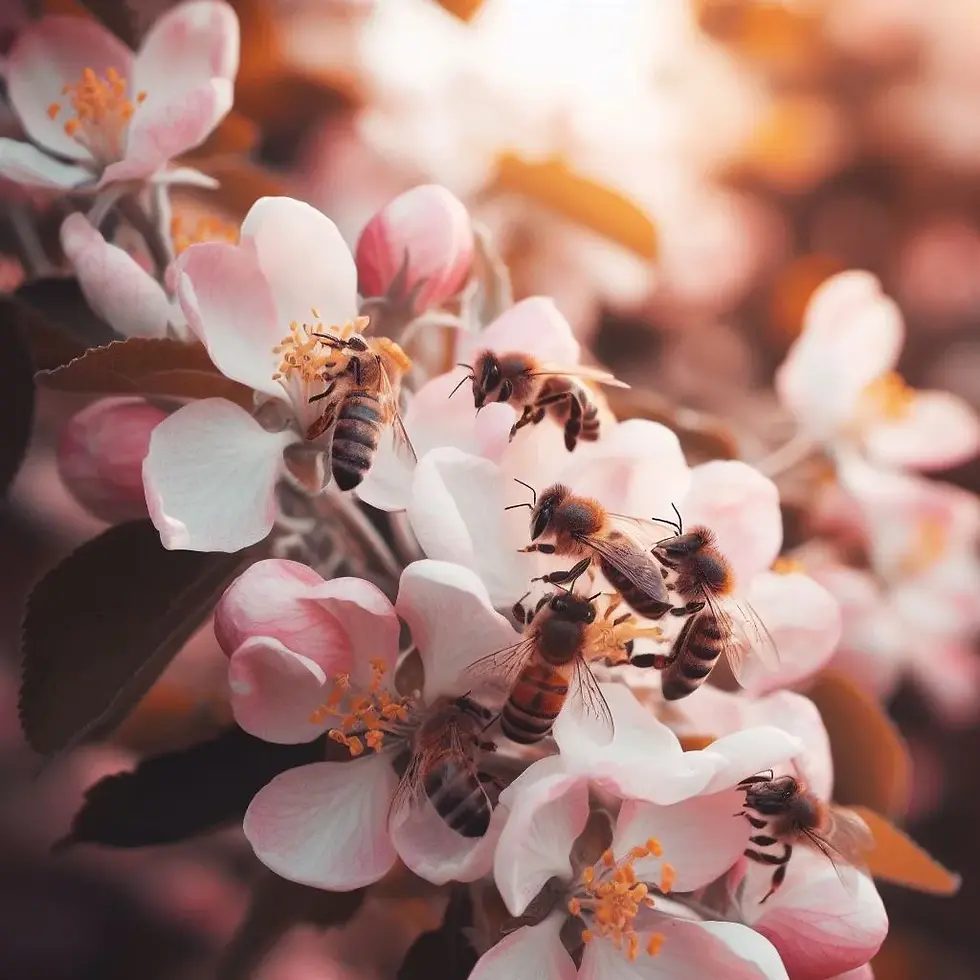
Almond Pollination Heroes: The Honey Bee, Beekeepers, and Growers Roles
Every February, the California orchards turn into the busiest place on earth for honey bees.
Betsy and I traveled out here to catch the action. It is hard to describe the scale of it until you see it yourself.
Millions of bees are shaking off the winter chill and getting to work. They turn acres of bare trees into a sea of flowers in just a few weeks. The growers are anxious to see them arrive because their entire season depends on it.
This whole event sustains a billion-dollar industry, but it relies on a fragile handshake between beekeepers and farmers.
Success comes down to timing and bee health. We want to show you the logistics behind the bloom and how they manage their hives during this demanding time.
We’ll also discuss the broader environmental implications of this event and recent advances that may improve sustainability.
When we peel back the layers of this phenomenon there are fascinating stories within almond pollination that link nature, agriculture, economics, and cutting-edge technology.
The Almond Industry and Its Dependence on Honey Bees
Almonds aren't just a niche snack anymore. They are California’s most valuable crop. You can see the shift just by looking at the dairy aisle where almond milk is taking over.
California now grows 80 percent of the world’s almonds. That adds up to over 4.5 billion dollars in exports every year. But that entire industry relies on the honey bee.
The trees bloom for just a few weeks in the spring. They need pollination to set the nuts for harvest. Native bee populations are down and they simply can't handle the workload. The growers need commercial honey bees to pick up the slack.
Beekeepers transport millions of colonies to the Central Valley to get the job done. It is a massive undertaking. The bees work from dawn to dusk and pollinate over 80 billion blossoms in a five-week window.
This work is important for beekeepers too. Pollination fees can make up nearly half of a beekeeper's annual income. This single season links the financial health of the almond growers directly to the beekeepers. It is a partnership built on hard work and timing.
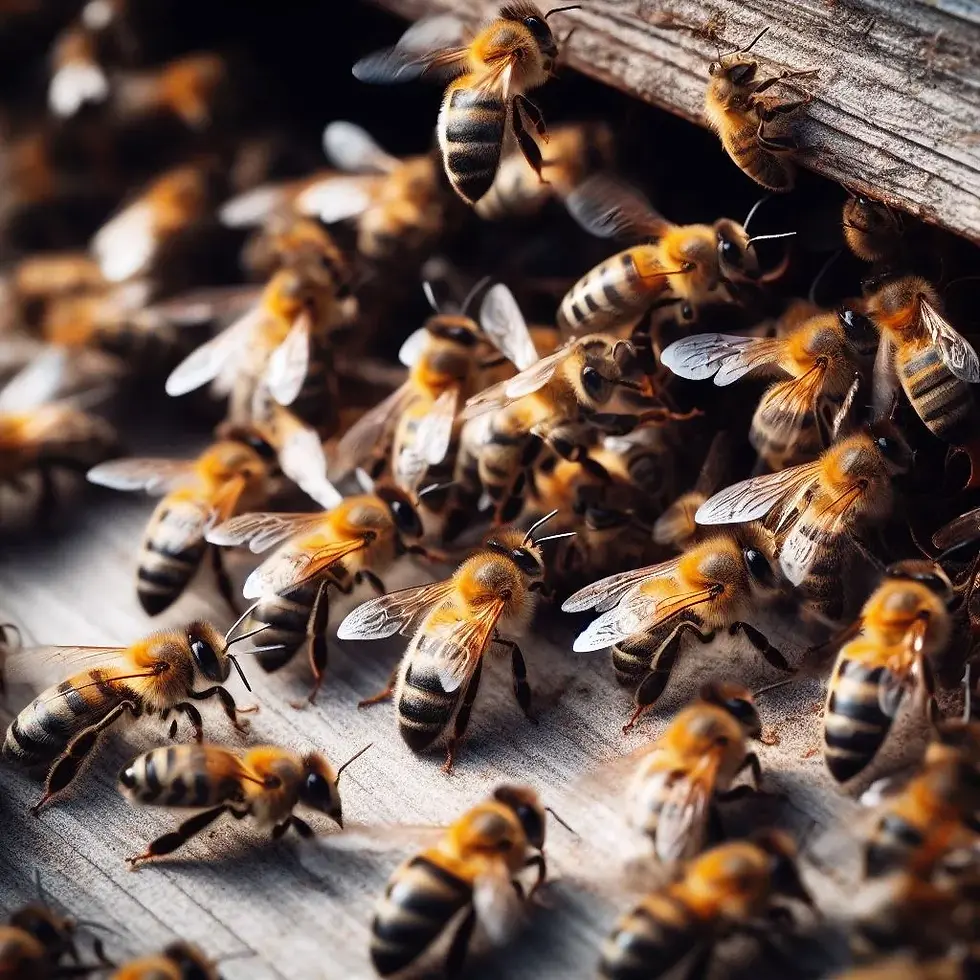
The Logistics and Stresses of Bee Migration
Moving this many bees is a huge challenge. It takes serious planning and coordination between the growers and beekeepers.
The migration starts in early February. Trucks head out from as far as Florida, New England, and the Dakotas.
Semi-trucks stacked high with pallets of hives make the long haul to California. The bees need time to settle in and acclimate once they get them unloaded.
They have to stagger the deliveries carefully. It is timed to match the specific bloom schedule of the orchards in different regions.
Once the trucks arrive, the hives are scattered throughout the dormant orchards. The locations shift constantly to match the new sections coming into bloom.
Forklifts run nonstop to move hives at night when the bees are safely clustered inside. It is a logistical dance that requires military precision.
Beekeepers also add fresh honey frames and pollen patties. The bees need the extra food to recover from the stress of the road and start raising brood.
The colonies have to rebuild their numbers fast. They only have a narrow 4 to 6 week window to get the job done before facing the long trip home.
Bee Health and Management During Almond Tree Pollination
Keeping bees healthy during almond pollination is a massive challenge for both the beekeepers and the growers.
Stressed bees just don't perform well. The colonies need to be strong and vigorous to handle the workload.
Bringing millions of hives together creates a breeding ground for pests and diseases. Varroa mites spread easily when the colonies are packed this tight.
Viruses and parasites can tear through struggling hives. Since there isn't much genetic diversity, illness can spread like wildfire.
Pesticides are another major hurdle. Sprays used right before the bloom can cause serious losses. Some fungicides are toxic to the developing brood and hurt the overall health of the colony.
Beekeepers and farmers have to communicate constantly. Simply changing the timing of a spray can save a lot of bees.
Weather is the final variable. Extreme heat, floods, or sudden freezes can devastate the bees during the bloom. Beekeepers have to monitor their hives closely and be ready for anything.
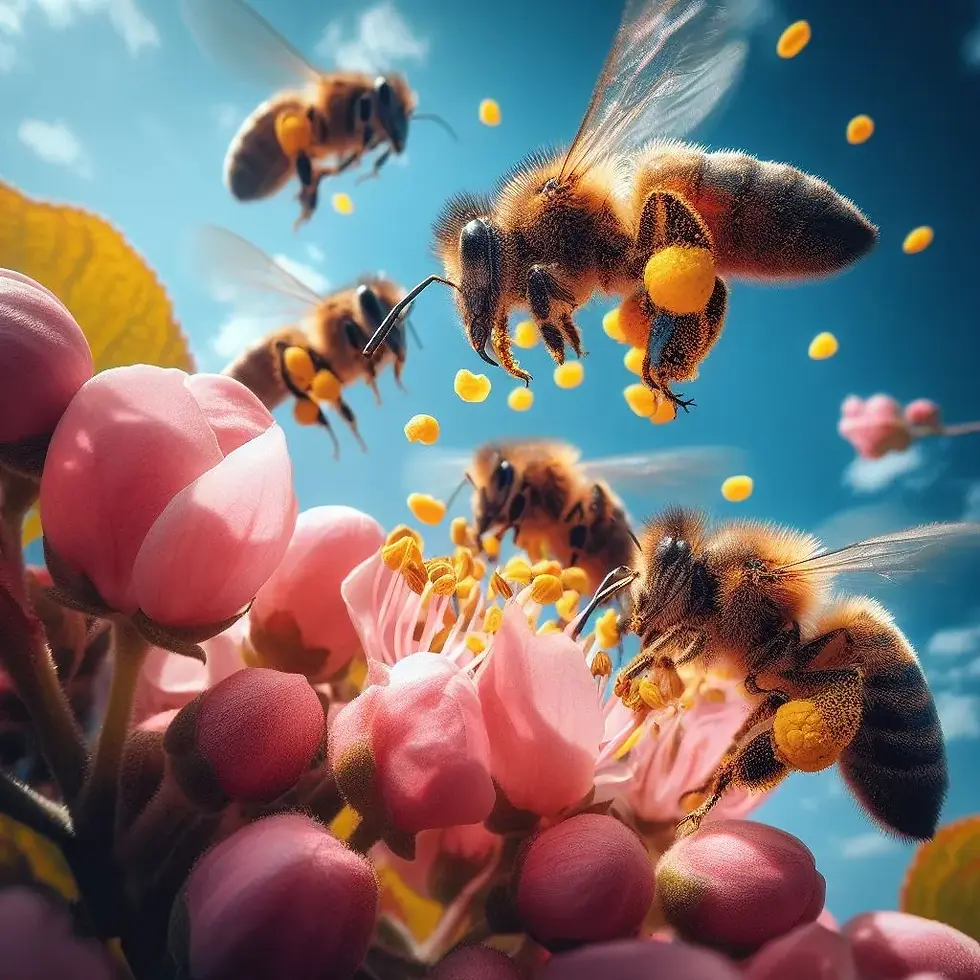
The Impact of Climate Change on Almond Pollination
Climate change doesn’t just impact the weather - it’s also altering California’s seasonal clock, with profound implications for almond pollination.
Rising temperatures cause fluctuations in bloom timing year after year, hampering coordination efforts. Erratic chill hours and warmer winters likewise disrupt almond tree dormancy patterns.
Meanwhile, drought and reduced snowpack promote earlier bloom onset while limiting orchard access to water during this crucial developmental window.
Moisture stress then leads to reduced flower production for bees to collect from.
Modeling indicates climate shifts could cause the almond bloom to advance up to 3 weeks earlier by 2050.
These volatile conditions make planning and executing seamless bee migration patterns infinitely more complex. The future may necessitate new almond varietals with shifting bloom capabilities and drought tolerance to adapt to changing climate realities.
Economic Aspects for Beekeepers
The economics swirling around almond pollination hold staggering implications for the beekeeping trade. Pollination fees paid per contracted colony can infuse vital cash flow to cover operational costs after expensive winter preparations.
Rates fluctuate in response to hive inventory and farmer demand, ranging from $200-$275 in recent seasons.
With the average beekeeper shuttling 1600 hives to almonds, pollination payouts represent nearly 60% of annual income. This far eclipses the 25% generated from honey production or other revenue streams.
However, realizing full rental incomes depends on delivering robust, populous colonies. Weaker units see substantial deductions to account for reduced pollination capacity.
Hives lost to transportation incidents, vandalism, pesticide kills or colony collapse also represent major financial hits.
Despite the risks, most beekeepers consider almond pollination income the backbone for business survival. As demand escalates for healthy bee colonies, so too do pollination prices, making the event an increasingly essential economic engine.
The Role of Technology and Research
Realizing the full potential of honey bee contributions means leveraging science to navigate mounting environmental pressures.
Researchers are accordingly racing to provide solutions through major advances.
Precision technology like digital hive monitoring systems now delivers 24/7 insight into colony strength.
Temperature and humidity readings, plus built-in scales tallying honey stores, help assess supplement needs and pollination readiness.
Geographic Information Systems and predictive models now map real-time bloom status to improve transportation coordination.
Meanwhile, mapping bee health factors across the state highlights regional risks for avoiding pesticide incidents or disease outbreak epicenters.
Genomic research also works toward breeding honey bee strains that are more resilient against varroa mites, insecticides, and climate fluctuations - a key long-term adaptation strategy.
Together, these breakthroughs offer Dynamic solutions for overcoming growing environmental complexity.

Ethical and Environmental Considerations
Despite its indispensable role in almond production, migratory beekeeping faces criticism regarding ethics and broader ecosystem impacts.
Large- scale almond monoculture supports only a single flower source. Critics argue this provides a nutritionally inadequate, stressful diet lacking the diversity bees need to thrive long-term.
They contend reliance on this event pressures colonies and helps propagate collapsing populations.
Related is the question of overworking commercial bees pollinating crops across increasingly vast agricultural zones.
While almond farmers pay well for their services, some argue bees provide far more total value to food systems than they receive in return compensation.
Habitat loss in high-intensity farming regions also leaves bees few native forage options outside orchards, forcing confinement when not pollinating.
Supporting biodiversity through flowering field borders, hedgerows, and other forage could bolster nature’s pollinators region-wide.
Integrating more thoughtfully managed open spaces may help mitigate ethical issues. But the fact remains: until technology advances provide alternative solutions, the livelihoods of bees and almond growers will remain deeply intertwined.
Let's Sum It All Up
California Almonds represent a pinnacle of the intricate connections linking human agriculture and the natural environment.
This single event bears tremendous influence over global food systems and local economies alike due to our dependence on bees as catalysts for nut production.
Yet inherent risks abound from pests, pathogens, pesticides, and volatile weather patterns, all amplified by climate change realities.
Fortunately, expanding technology and research initiatives provide hope for overcoming these mounting pressures. The Almond Board of California should step in and help find answers to some of these pressing issues.
What’s certain is that almond growers and beekeepers must continue working in harmony to ensure ethical, sustainable livelihoods for both colonies and farmland.
The Central Valley in California has a great deal to lose without the bee's help.
While bees may not understand the concept of money, their role in lucrative almond orchards truly can’t be bought.
We will be there in February 2024 with more news and stories from the front lines of the beekeepers.
Betsy and Pete
Las Vegas, Nevada
About Us: The Authors

We’re Betsy and Pete - Beekeepers on a Mission in Las Vegas
We’re not just in the bee business, we’re in the bee-saving business. Trained by a master beekeeper and backed by hundreds of successful removals, we are dedicated to rescuing and relocating honey bees with care and precision.
Every swarm we save and every hive we manage reflects our deep love for the bees.
At our Joshua Tree Preserve in Arizona, we care for dozens of thriving hives. Some wild, some honey-bearing, and all are part of our commitment to ethical, sustainable beekeeping.
Why Vegas Bees? Because We Never Stop Learning or Caring
Beekeeping is always evolving, and so are we. We stay on the cutting edge by continuing our education, connecting with fellow beekeepers, and refining our beekeeping practices and techniques to ensure the best outcomes for both bees and people.
Whether it’s advanced bee removal strategies or the latest natural methods, we’re always one step ahead.
We’re also proud to support the beekeeping community with high-quality beekeeping supplies for everyone. If you’re ready to suit up and start your journey, we’ve got what you need.


