
Best Lavender Plants for Attracting Bees in Las Vegas.
- Mar 22
- 8 min read

Lavender is one of the smartest plants a Las Vegas homeowner can grow.
It thrives in desert heat, blooms for months at a time, and produces more nectar than most plants can manage in a mild coastal climate.
For bees and other pollinators, a well-placed lavender plant is like a neighborhood diner that never closes.
But not all lavender is created equal, and desert growing comes with its own rules. The wrong variety, poor drainage, or too much water can turn a promising plant into a dead one before the first bloom.
We will cover the varieties that actually work in Southern Nevada, how to plant them so bees find them, and what to do if your lavender garden becomes more popular with pollinators than you expected.
Why Bees Love Lavender
In a landscape full of rock, gravel, and heat-stressed plants, lavender stands out like a beacon. Bees are drawn to it for several reasons that work together to make it one of the most reliable pollinator plants in the Mojave.
Nectar that keeps coming: Lavender produces nectar continuously across a long
blooming season. Bees can return to the same plants day after day, which is why
established lavender quickly becomes a fixed stop on their foraging routes.
Color bees can see: Bees are especially tuned to shades of purple and blue, colors
that stand out in their visual range. Lavender's violet flower spikes are hard for them to miss.
Scent that travels: The aromatic oils in lavender carry far on a desert breeze. Once a bee discovers the source, it communicates the location back to the colony. One lavender plant can trigger a neighborhood-wide bee response.
Efficient flower structure: Lavender blooms grow in tight spikes, letting bees move quickly from one flower to the next without wasting energy. More visits per minute means more nectar gathered.
Best Lavender Varieties for Las Vegas
The Las Vegas Valley sits in USDA hardiness zone 9b to 10a, with summer highs
regularly above 110°F and very low humidity. Most lavender varieties come from
Mediterranean climates that are warm, dry, and sunny. Not all of them are built for
Mojave-level heat. Here are the three main types and how they perform locally.
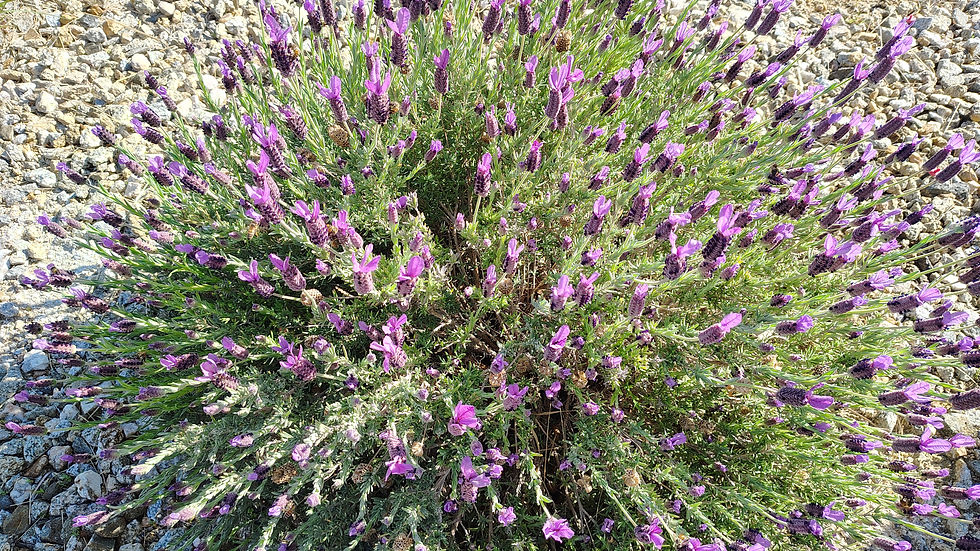
Spanish Lavender (Lavandula stoechas)
Spanish lavender is our top pick for Las Vegas gardeners who want reliable performance. It handles extreme heat better than most varieties and rewards that
resilience with distinctive blooms with compact flower heads topped with small, colorful bracts that seem like butterfly wings.
Bees visit Spanish lavender consistently throughout its blooming season, and the plant is widely available at local nurseries, especially in spring. It tends to be forgiving of desert soil conditions and bounces back well from the occasional dry spell.

French Lavender (Lavandula dentata)
French lavender is another good desert performer. It blooms repeatedly across the year rather than in a single flush, which gives pollinators access to nectar over a much longer window.
The gray-green, toothed leaves also give it a distinctive look that adds texture to desert landscaping. Its compact, tidy growth habit makes it easy to place near walkways, patios, or garden borders, anywhere you want both the fragrance and the pollinator activity close by.
English Lavender (Lavandula angustifolia)
English lavender is the classic and the one most people picture when they think of lavender fields. It has the strongest fragrance of the three and bees are absolutely wild about it when it blooms.
The catch is that English lavender struggles in peak Las Vegas summer heat. If you want to grow it, site it where it receives morning sun and some afternoon shade during July and August. With that extra care, it can thrive, but it requires more attention than the Spanish or French varieties. We never had luck with it in our backyard.

How to Plant Lavender So Bees Actually Find It
Lavender is not a fussy plant, but a few fundamentals make the difference between a struggling specimen and a pollinator magnet.
Full sun is non-negotiable
Lavender needs at least six hours of direct sun daily. In Las Vegas, that is rarely the
limiting facto, but avoid planting in spots shaded by walls, fences, or large shrubs.
Less sun means fewer blooms, and fewer blooms mean fewer bees.
Drainage matters more than water
Desert soil often has a layer of caliche, a hardened mineral crust, that prevents
water from draining freely. Lavender roots sitting in slow-draining soil will rot, usually before you realize there is a problem.
If your soil is heavy or clay-like, mix in coarse sand or decomposed granite before
planting, or build a simple raised bed. Either approach improves drainage significantly. When in doubt, plant high. A slightly raised mound drains better than a flat bed.
Water deeply, not frequently
New plants need water every few days for the first few weeks. Once established, typically after one full growing season, lavender thrives on deep watering every one to two weeks, or even less during cooler months.
Overwatering is far more common than underwatering and is the primary reason lavender fails in Las Vegas yards.
Group plants together
A single lavender plant may attract the occasional bee. Three to five plants grouped together create a visible cluster of color and scent that bees can locate from much farther away. When bees find a reliable nectar source, they recruit other foragers from their colony, making a small lavender patch a busy one.
How Many Plants Do You Need?
More is generally better, but even a small planting makes a difference. Here is a rough guide to what you can expect:
• 1 plant: occasional bee visits, especially if other lavender is nearby
• 3 to 5 plants: regular pollinator activity throughout the blooming season
• 5 to 10 plants: a reliable, high-traffic nectar source that bees return to daily
• Large patch: an active pollinator zone that draws honey bees, native bees,
butterflies, and beneficial insects throughout the day.
Many homeowners find that once the lavender is established, they spend more time watching pollinators work than they expected. The activity is calming in its own way. We love to watch dozens of bees moving efficiently from spike to spike, filling the air with a low, steady hum.

When Lavender Blooms in Las Vegas
One of lavender's advantages in Southern Nevada is its extended bloom window. Most varieties begin flowering in late winter or early spring, often as early as February or March, which coincides with the season when bees are most actively building up their colonies after winter.
Depending on the variety and growing conditions, additional blooms can appear in early summer, late summer, and fall. Some plants continue flowering into December during mild years. This long season makes lavender one of the most consistently useful pollinator plants available in desert landscapes.
Building a Bee-Friendly Lavender Garden
Lavender pairs beautifully with other drought-tolerant, pollinator-friendly plants.
Combining several species extends your bloom window and gives bees more options throughout the year. Good companions for a Las Vegas pollinator garden include:
• Rosemary: blooms in winter and early spring when little else is flowering
• Salvia: multiple varieties thrive in desert heat and produce abundant nectar
• Thyme: low-growing, tough, and covered in tiny flowers bees adore
• Desert marigold: bright yellow blooms from spring through fall
• Penstemon: native to the Mojave, extremely drought-tolerant, beloved by
native bees.
A well-planned desert pollinator garden can support bee activity twelve months a year, rotating through different plants as each one comes into bloom.

What If Too Many Bees Show Up?
This is one of the most common questions from homeowners new to pollinator
gardening. The short answer is: foraging bees are remarkably calm. A bee that is
collecting nectar has one job, and it is not paying attention to you. Most people can stand directly next to a lavender plant covered in bees without any risk of being stung.
The situation that occasionally causes concern is a honey bee swarm, a large cluster of bees that appears on a tree branch, fence post, or the side of a structure. Swarms are a natural part of honey bee reproduction, occurring when an established colony divides and a portion of the bees leave with a new queen to find a home.
Swarms are typically very docile and not aggressive, but they can be startling if they appear in a yard. If a swarm settles on your property, the best approach is to contact a professional live bee removal service.
A trained beekeeper or removal specialist can relocate the swarm safely, without harming the bees, and without chemicals. Swarm season in Las Vegas typically runs from March through May, though late-season swarms can occur into early summer.

Frequently Asked Questions
Does lavender attract honey bees in Las Vegas?
Yes, reliably and in numbers. Lavender produces abundant nectar over long bloom periods, making it one of the most consistently visited plants by both honey bees and native bee species in Southern Nevada.
Is lavender drought tolerant in Nevada?
Very much so, once established. Young plants need regular watering for the first
growing season. After that, most lavender varieties thrive on minimal supplemental water and handle the dry conditions of the Las Vegas Valley well.
Which lavender variety handles desert heat best?
Spanish lavender is the most heat-tolerant option and the safest bet for Las Vegas gardeners.
What if I get a bee swarm near my lavender?
Contact a professional bee removal service. Swarms are generally harmless and non-aggressive, but a trained specialist can relocate them safely if they settle somewhere inconvenient. Avoid disturbing the swarm or attempting removal without professional help.
Lavender Belongs in Every Las Vegas Yard
Few plants earn their place in a desert landscape as thoroughly as lavender. It is
beautiful, fragrant, water-wise, and alive with pollinator activity for much of the year.
Once established, it largely takes care of itself while providing one of the most
consistent nectar sources available to bees in the Mojave.
Start with a few plants of Spanish or French lavender, give them full sun and well-
draining soil, and resist the urge to overwater. Within a single season, you will likely have more bee visitors than you expected, and a garden that feels genuinely alive.
Betsy & Pete
🐝Las Vegas’s All-Natural Live Bee Removal Team
About Us: The Authors

We’re Betsy Lewis and Pete Rizzo - Beekeepers on a Mission in Las Vegas
We’re not just in the bee business, we’re in the bee-saving business. Trained by a master beekeeper and backed by hundreds of successful removals, we are dedicated to rescuing and relocating honey bees with care and precision.
Every swarm we save and every hive we manage reflects our deep love for the bees.
At our Joshua Tree Preserve in Arizona, we care for dozens of thriving hives. Some wild, some honey-bearing, and all are part of our commitment to ethical, sustainable beekeeping.
Why Vegas Bees? Because We Never Stop Learning or Caring
Beekeeping is always evolving, and so are we. We stay on the cutting edge by continuing our education, connecting with fellow beekeepers, and refining our beekeeping practices and techniques to ensure the best outcomes for both bees and people.
Whether it’s advanced bee removal strategies or the latest natural methods, we’re always one step ahead.
We’re also proud to support the beekeeping community with high-quality beekeeping supplies for everyone. If you’re ready to suit up and start your journey, we’ve got what you need.


