
What Is Bee Bread? It's the Fermented Fuel Behind Healthy Beehives.
Updated: Jan 18

We’ve already walked you through honey, propolis, and royal jelly in past articles. But there’s one hive product that completely changes how you understand bees once you really see it.
It is called bee bread, also known as perga.
Those cells packed with dense, colorful, slightly glossy material are not raw pollen.
It is a controlled fermentation process that honey bees have perfected over millions of years. In the Mojave Desert, it is the difference between colonies that survive and colonies that fail.
Listen to the Article Here:
Why Pollen Alone Is Not Enough
Bees do not live on raw pollen.
Each pollen grain is protected by an outer wall called the exine. This layer is made primarily of sporopollenin, one of the most chemically resistant biological materials found in nature.
It protects the genetic material of plants, but it also makes raw pollen extremely difficult to digest.
Without processing, much of the pollen’s nutrition remains locked away. Bees solved this problem long before humans understood fermentation.
How Bees Turn Pollen Into Bee Bread
Worker bees collect pollen and pack it tightly into the comb cells. They mix it with nectar or honey and add enzymes and beneficial microbes from their saliva. Once the cell is full, they seal it with a thin layer of honey.
That seal limits oxygen and creates the conditions needed for lactic acid fermentation.
Over the next several weeks, naturally occurring lactic acid bacteria convert sugars into lactic acid. As the pH drops, the pollen wall softens and breaks down. This process stabilizes the food, prevents spoilage, and dramatically increases nutrient availability.
The result is bee bread, a preserved, digestible, long-term food source that can sustain a colony when fresh forage disappears.
What Makes Bee Bread So Powerful
Bee bread is not just pollen with honey mixed in. Fermentation transforms it.
Scientific analysis shows bee bread contains hundreds of biologically active compounds, including:
Essential amino acids that support growth, tissue repair, and immune function.
Vitamins such as A, C, and E act as antioxidants and support stress resistance.
Minerals like potassium, magnesium, and phosphorus are critical for muscle function and metabolism, especially during extreme heat.
Flavonoids, including quercetin and kaempferol, with documented antibacterial and antioxidant properties.
Fermentation also introduces beneficial microbes, including Lactobacillus species, that help suppress harmful pathogens inside the hive.
Why Bee Bread Outperforms Raw Pollen
Raw pollen has value, but bee bread is the upgraded form.
Since the pollen wall has been partially broken down, nutrients are easier to absorb. The food is fermented, making it more stable and resistant to mold and spoilage. It also contains beneficial bacteria, which actively protect colony health.
This is why nurse bees rely on bee bread to produce royal jelly and why colonies with strong bee bread stores overwinter better and rebound faster in spring.
Bees did not invent fermentation by accident. They use it as a survival strategy.
Harvesting With Restraint
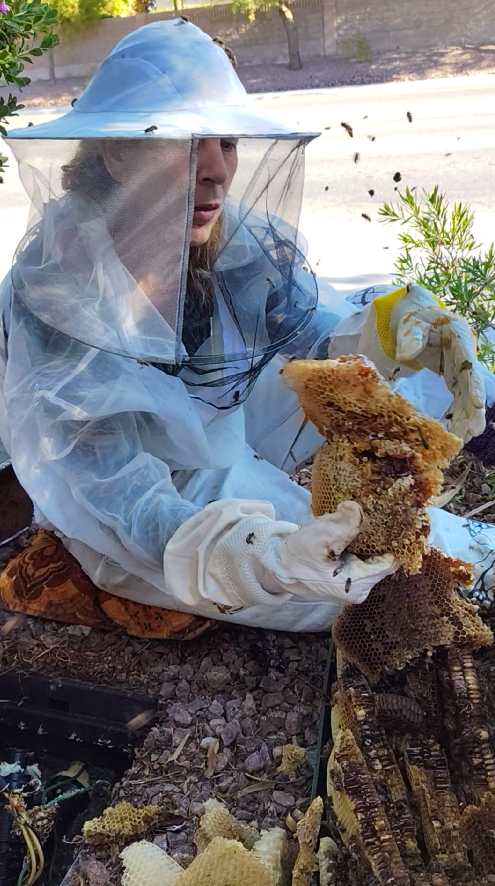
On rare occasions, usually in the fall, we may harvest a very small amount of bee bread. We freeze the comb first so the perga can be removed without damaging the structure of the hive.
The flavor is complex. Earthy and floral at first, followed by a somewhat tangy note from the lactic acid fermentation.
But we follow one rule without exception. Bee bread belongs to the bees first. In a desert environment, it is their insurance policy. Properly stored bee bread can last up to two years, giving colonies a reserve of nutrition and medicine during drought, extreme heat, or poor bloom cycles.
Seeing the Hive Differently
Once you understand bee bread, hive inspections change.
Those packed cells are no longer just food storage. They are evidence of planning, chemistry, and microbial cooperation happening at a scale we rarely notice. Every healthy hive contains a working fermentation system designed to support life under harsh conditions.
Humans did not invent fermentation. Honey bees perfected it long before we ever baked bread or brewed beer.
Betsy & Pete
🐝Las Vegas’s All-Natural Live Bee Removal Team
About Us: The Authors

We’re Betsy and Pete - Beekeepers on a Mission in Las Vegas
We’re not just in the bee business, we’re in the bee-saving business. Trained by a master beekeeper and backed by hundreds of successful removals, we are dedicated to rescuing and relocating honey bees with care and precision.
Every swarm we save and every hive we manage reflects our deep love for the bees.
At our Joshua Tree Preserve in Arizona, we care for dozens of thriving hives. Some wild, some honey-bearing, and all are part of our commitment to ethical, sustainable beekeeping.
Why Vegas Bees? Because We Never Stop Learning or Caring
Beekeeping is always evolving, and so are we. We stay on the cutting edge by continuing our education, connecting with fellow beekeepers, and refining our beekeeping practices and techniques to ensure the best outcomes for both bees and people.
Whether it’s advanced bee removal strategies or the latest natural methods, we’re always one step ahead.
We’re also proud to support the beekeeping community with high-quality beekeeping supplies for everyone. If you’re ready to suit up and start your journey, we’ve got what you need.


