
What to Do If You Find a Beehive on Your Property

We've Spent Years Removing Bees From Homes. Here's Every Answer to the Question You're About to Google.
It's 7:42 AM and my phone is ringing.
"There are bees. Thousands of them. They're going into a crack in my brick and I don't know what to do and my kids can't go outside and..."
Listen to This Article:
I've had this conversation roughly 3,000 times. I know exactly where you are in this moment. You found bees somewhere they shouldn't be, you Googled something like "help I have bees on my porch," and now you're spiraling through every terrifying scenario while also trying to figure out if you're a bad person for wanting them gone.
Let me save you about four hours of increasingly frantic searches. I'm going to answer every question in the order you're about to ask them.
The Panic Phase: "Am I About to Get Stung?"
"Will a beehive attack you if you walk past it?"
No. Probably not. Maybe.
Here's the real answer: Honeybees near their hive are defensive, not aggressive.
They won't chase you down the street like in a cartoon. But if you're mowing your lawn three feet from where they're entering your wall, or if you accidentally bump the branch their swarm is hanging from, yes, you will get stung. Multiple times.
The difference matters. A hive in a tree 20 feet away? You can walk past it all day. Bees flying directly at face-level across your walkway to reach their entry point? That's a problem.

"Are bees in a wall dangerous?"
To you? Not immediately. To your house? Potentially very.
A colony of 30,000 bees can produce 60-80 pounds of honeycomb in a wall cavity in a single season.
I've opened walls where honey was literally dripping down the inside of the drywall. When that honey gets warm in summer, it melts, seeps, stains ceilings, attracts ants, and creates a smell you cannot get out.
But the bees themselves aren't going to break through your drywall and swarm your bedroom. I get asked "can bees chew through drywall" at least once a week. No. They can't. They found a way in from outside, not through your walls.
"How to stop bees from coming inside the house?"
Turn off your lights at night and check for gaps.
Bees are attracted to light, especially if they're building comb near an interior wall that has recessed lighting or heat. I've seen them come through light fixtures, bathroom exhaust fans, and gaps around windows that the homeowner didn't even know existed.
Short-term fix: tape over any visible gaps with duct tape, turn off lights in that room, and stuff a towel under the door. This buys you time until a professional can arrive.
Do not spray them with Raid. You'll just make them more agitated and you'll still have the hive.

The Identification Phase: "What Am I Even Looking At?"
"Bee vs wasp nest identification pictures"
Stop. Before you go down that image-search rabbit hole, answer these questions:
Is the nest papery and gray? That's wasps.
Is it a perfectly round ball hanging from a branch? That's a swarm of honeybees (temporary).
Are you just seeing bees flying in and out of a hole with no visible nest? That's an established hive inside your structure.
Are they in the ground? Could be bumblebees, could be yellow jackets.
The texture tells you everything. Honeybees build wax comb. Wasps build paper nests that look like an art project. If you're seeing papery layers, you're not dealing with honeybees.
"Huge ball of bees on tree branch"
Congratulations, you have a swarm. This is actually the easiest situation to deal with, and it's temporary.
A swarm is 3,000-10,000 bees that left their old home with their queen and are looking for a new place to live. They cluster on a branch (or a fence post, or your mailbox) while scout bees search for a suitable cavity.
Swarms are shockingly docile. They have no hive to defend and their bellies are full of honey. I've scooped them into boxes with my bare hands.
Here's what matters: A swarm will leave on its own within 24-72 hours once the scouts find a new home. But that new home might be inside your wall. So if you see a swarm on your property, call someone immediately to remove it before they move in permanently.
"Large fuzzy bee with black tail"
That's a carpenter bee, not a bumblebee, and yes, there's a difference.
Bumblebees are fuzzy all over and nest in the ground or in old rodent burrows. Carpenter bees have a shiny black abdomen and drill perfect half-inch holes in your wood siding, fascia boards, and deck posts.
If you see sawdust below a perfectly round hole, that's carpenter bee damage. They don't eat the wood; they tunnel into it to lay eggs. The damage is mostly cosmetic unless you ignore it for years and they return to the same holes season after season.
Carpenter bees are also hilariously territorial. The males (which don't sting) will dive-bomb your head if you walk past their territory. They're all bluster and no bite.

The Location Phase: "They're WHERE?"
"Beehive in chimney how to get out"
This is one of the worst locations, and I'm sorry.
Chimneys are attractive to bees because they're dark, protected, and have a ready-made entrance. The problem is access. I have to get on your roof, lower equipment down the flue, and somehow extract tens of thousands of bees and pounds of comb from a vertical shaft.
If they're in your chimney, don't light a fire thinking you'll smoke them out. You'll just kill them, and then you'll have rotting bees and fermented honey in your chimney. The smell will haunt you.
"Honey leaking through ceiling from bees"
Call someone today. Not tomorrow. Today.
This means you have a mature colony that's been there for months, possibly years. The comb is full, it's hot, and gravity is doing what gravity does.
I once opened a ceiling in July and had honey pour out like a faucet. The homeowner had been seeing "a few bees" for two years and ignored it. The repair cost was $8,000. The bee removal was $1,600.
"Sound of bees in wall making buzzing noise"
You're hearing the hum of the colony maintaining temperature. When it's 95°F outside, they fan their wings to cool the hive. When it's cold, they vibrate their flight muscles to generate heat.
If you can hear it through your wall, you have a substantial colony. We're talking 20,000+ bees.
People ask me all the time: "How do I find where bees are entering the wall?" Go outside at dusk. Watch your house.
You'll see a steady stream of bees all converging on one spot. That's your entry point. It might be a weep hole in brick, a gap under siding, a knot hole in wood. Bees need an opening roughly the size of a pencil.
The Ethics Phase: "Am I a Monster?"
"How to get rid of bees without killing them"
I appreciate that you're asking this. Genuinely.
For a swarm: call a beekeeper. Many will remove it for a low price because they may want the bees.
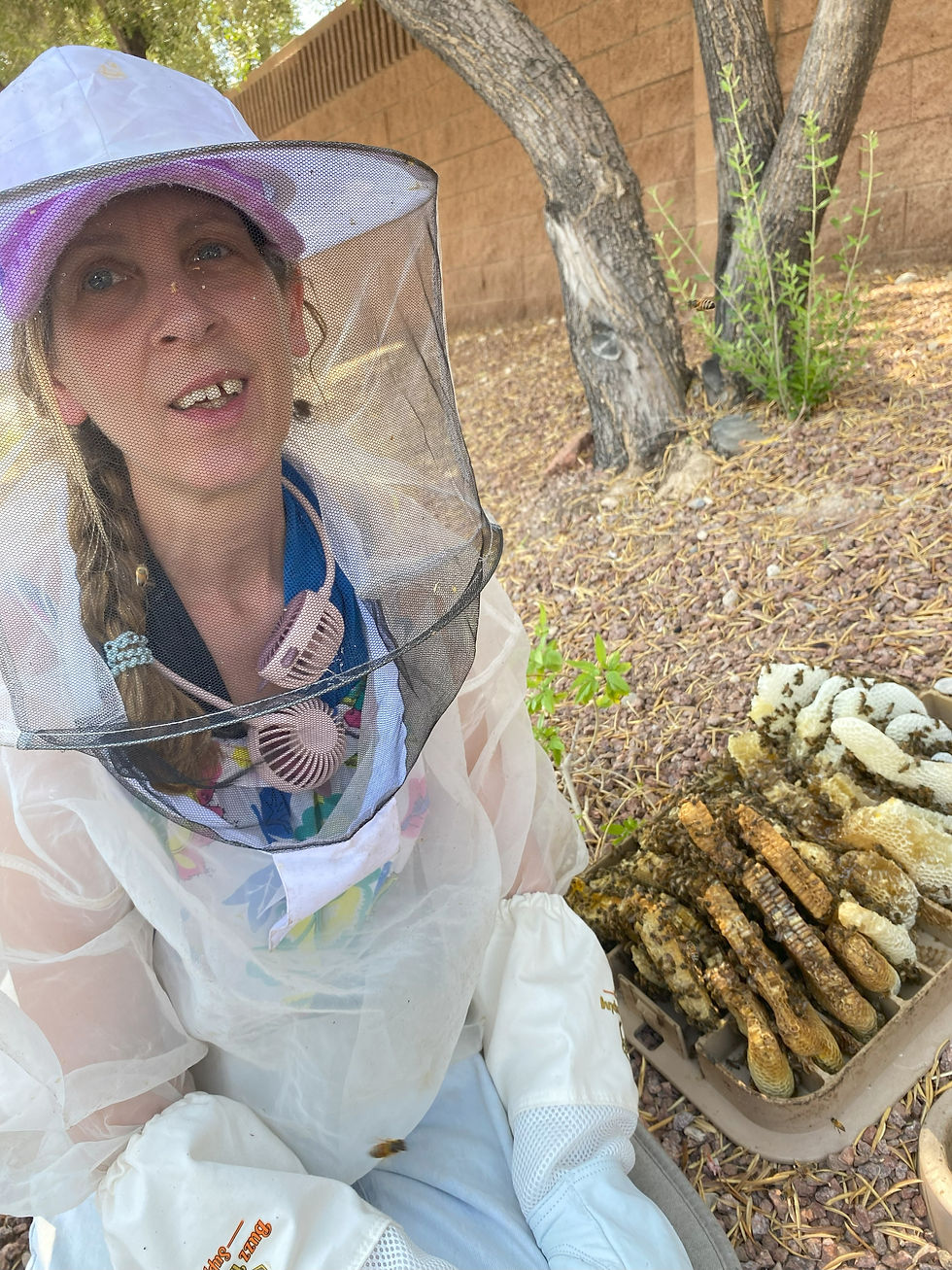
For an established hive in a structure: you need a live removal, which means cutting into your wall, removing all the comb, vacuuming up the bees, and relocating them.
This costs $500-$2,000 depending on location and access.
The key word is all. If you leave honeycomb in the wall, you're inviting them back, plus every other bee colony in a 3-mile radius.
"Will bees leave on their own?"
Not usually. A swarm will leave. An established hive will not.
People want to believe bees are seasonal, like wasps. They're not. A honeybee colony is perennial. They'll stay in your wall through winter, shrinking their cluster to stay warm, then explode in population again in spring.
Ignoring them doesn't make them leave. It makes the problem bigger.
"DIY bee removal with vinegar or smoke"
Please don't. Vinegar doesn't repel bees effectively. Smoke calms them temporarily (beekeepers use it), but unless you're suiting up and removing the hive, you're just making them angry when the smoke clears.
I've been called to dozens of homes where someone tried DIY removal. One guy dumped gasoline in his wall cavity and lit it on fire. Yes, it killed the bees. It also burned a hole in his house.

The Money Phase: "How Much Is This Going to Cost Me?"
"Average cost of beehive removal from wall"
Live removal from a structure: $500-$2,500.
Swarm removal: $0-$200.
Extermination (just killing them): $150-$400, but then you still have dead bees and rotting comb in your wall.
"Do beekeepers remove bees for free?"
For swarms? Sometimes. For hives in walls? Almost never.
The romantic idea of the beekeeper who rushes over with joy to collect free bees doesn't match reality. Removing bees from a structure requires insurance, tools, carpentry skills, and hours of work.
The bees themselves aren't valuable enough to offset that labor.
Some beekeepers will do it cheaper than pest control companies because they want the bees, but "free" is rare.
"Does homeowners insurance cover bee damage?"
Usually no. Most policies exclude damage from insects or vermin. But if honey caused mold, or if you have a specific rider, there might be coverage. Read your policy or call your agent.
I've seen people get creative with claims, framing it as water damage from the honey rather than bee damage, but I can't recommend that.

The Prevention Phase: "Never Again"
"How to seal bee entry points"
After removal: caulk, expanding foam, steel wool, or metal screening. Bees can fit through a 3/8" gap.
But here's the critical part: don't seal the entry point while bees are still inside. I've arrived at homes where someone caulked the hole, trapping 20,000 bees inside the wall. They chewed a new exit... through the drywall into the bedroom.
"Will old wax attract new bees?"
Yes. Absolutely yes.
Honeycomb smells like home to bees. If you remove the bees but leave the comb, scout bees will find it and move a new colony in within weeks.
This is why proper removal requires opening the wall, removing every piece of comb, scraping the cavity clean, and treating it with a deterrent.
"Do bees return to the same spot every year?"
If you didn't remove the comb, yes.
If you did a proper removal and sealed the entry, no. They'll find somewhere else.
What You Should Actually Do Right Now
Here's my professional advice:
If you have a swarm, call someone today. It'll be gone in an hour and it's the easiest situation you'll face.
If you have bees going in and out of your house, don't wait. Every day they're building more comb and expanding the colony. Removal gets more expensive the longer you wait.
If you see honey stains or hear buzzing in walls, this is urgent. You're past the point of easy fixes.
And for the love of everything, don't spray them with a hose, set them on fire, or try to vacuum them out with your Shop-Vac.
I know it's stressful. I know you didn't budget for this. I know you're worried about killing bees when the world needs them.
But here's what I tell everyone: bees in a wall aren't helping the environment. They're in the wrong place. Getting them relocated to a proper hive where they can be managed and protected is actually good for bees.
You're not a monster for wanting them out of your house. You're just a homeowner dealing with a scary issue in a place it shouldn't be.
Now stop Googling, and make the call.
Betsy & Pete
🐝Las Vegas’s All-Natural Live Bee Removal Team
About Us: The Authors

We’re Betsy and Pete - Beekeepers on a Mission in Las Vegas
We’re not just in the bee business, we’re in the bee-saving business. Trained by a master beekeeper and backed by hundreds of successful removals, we are dedicated to rescuing and relocating honey bees with care and precision.
Every swarm we save and every hive we manage reflects our deep love for the bees.
At our Joshua Tree Preserve in Arizona, we care for dozens of thriving hives. Some wild, some honey-bearing, and all are part of our commitment to ethical, sustainable beekeeping.
Why Vegas Bees? Because We Never Stop Learning or Caring
Beekeeping is always evolving, and so are we. We stay on the cutting edge by continuing our education, connecting with fellow beekeepers, and refining our beekeeping practices and techniques to ensure the best outcomes for both bees and people.
Whether it’s advanced bee removal strategies or the latest natural methods, we’re always one step ahead.
We’re also proud to support the beekeeping community with high-quality beekeeping supplies for everyone. If you’re ready to suit up and start your journey, we’ve got what you need.


