
Why Bees Keep Coming Back to the Same Spot.
Updated: Jun 14

If bees keep returning to the same area of your home, its because that location still offers something they are actively searching for, usually leftover hive scent, old comb inside the structure, a hidden entry point, stable wall temperatures, or a protected cavity that previous colonies already proved was safe for survival.
Why Bees Return to the Same Location
Honey bees do not choose nesting sites randomly. Scout bees explore potential cavities looking for spaces that offer protection from heat, weather, predators, and moisture. Once a colony establishes itself somewhere, that location becomes attractive to future swarms for several reasons.

Residual Hive Scent
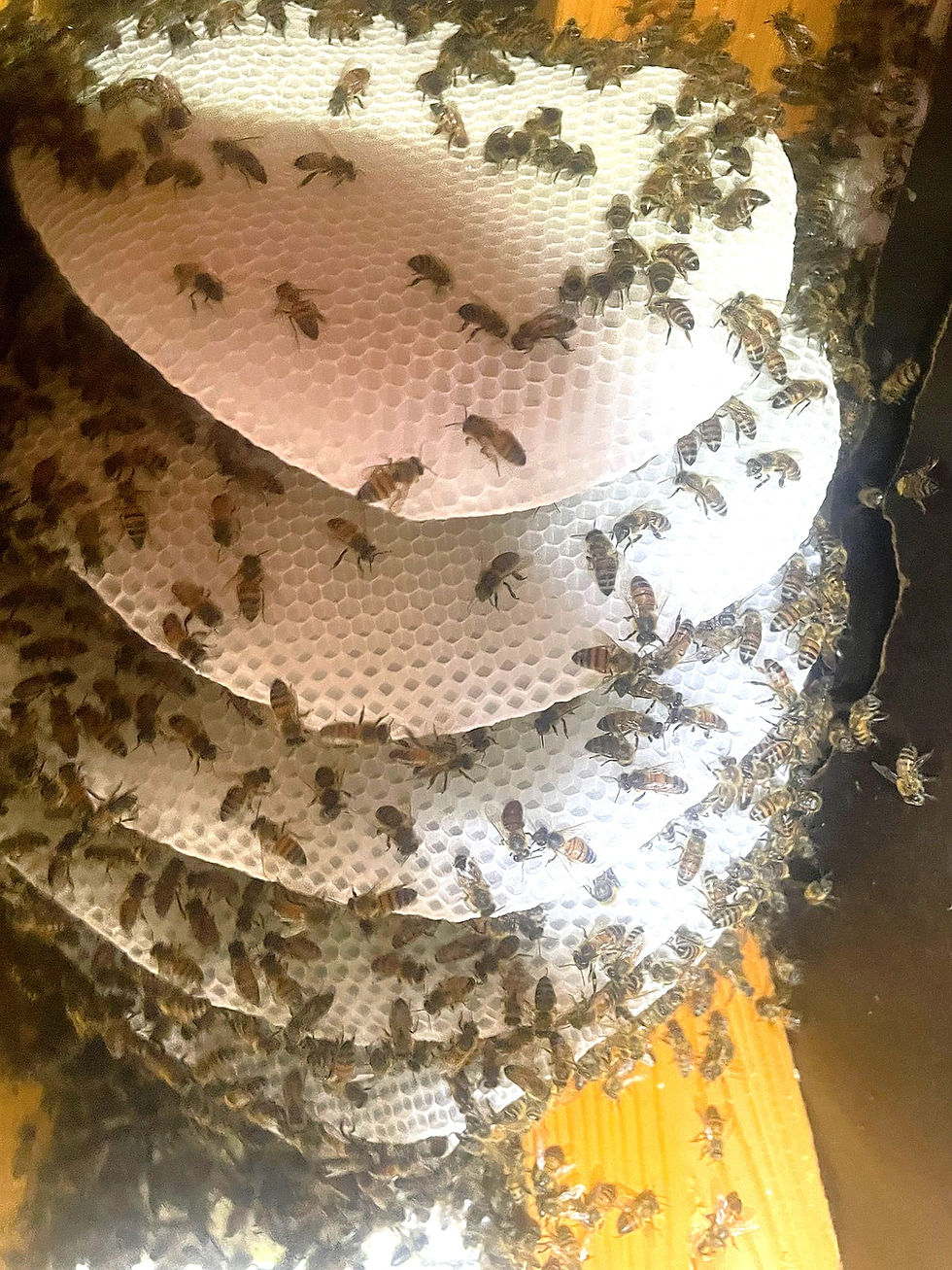
Old wax, honey, propolis, and brood comb give off odors that can persist inside a wall or roof cavity for months or even years after a colony has been removed or exterminated.
To a scout bee, that scent is a signal that the location has successfully supported a colony before. This makes it one of the most common reasons bees return to the exact same spot. Beekeepers deliberately use old comb in swarm traps because the attraction is so reliable.
Unsealed Entry Points
Even after a colony is removed, bees can re-enter if the original access points were not properly sealed. Honey bees can squeeze through gaps as small as 3mm, around roof tiles, fascia boards, vents, pipe penetrations, cracks in stucco, and utility openings.
Sealing only the visible entrance while missing secondary openings is a common reason problems recur.
In hot climates, building materials expand and contract seasonally, and new gaps can open over time even in structures that were previously sealed correctly.
Water Sources on or Near the Property
Sometimes bees are not nesting on the property at all, they are simply returning to a reliable water source.
Swimming pools, fountains, dripping irrigation, bird baths, pet bowls, leaking hose bibs, and air conditioning condensate drains can all draw large numbers of bees, especially during hot weather when water is scarce.
If you see bees drinking from a surface rather than entering a structure, this is likely what is happening. Foraging bees that find a consistent water source will recruit additional bees to the location and return daily.
Scout Bee Activity During Swarm Season
Swarm season typically runs from late winter through early summer in most of the United States, though it can extend year-round in warmer regions.
During this period, scout bees fan out from a swarm looking for a new home. A dry, protected void inside a wall or roof can look ideal, particularly if it previously housed a colony and still carries hive scent.
Seeing a few bees investigating a specific spot does not necessarily mean a colony has moved in yet. Early-stage scout activity is much easier to address than an established hive.

What You Can Do Yourself
Many recurring bee problems can be resolved or significantly reduced without professional help, depending on the situation.
Identify Whether Bees are Nesting or Foraging
Watch the bees for a few minutes. Bees that are entering and exiting a specific gap in a wall, eave, or other structure are likely nesting inside. Bees that are hovering around a water feature, plant, or open area are foraging or scouting and do not indicate a nest on the property.
Seal All Entry Points
If a colony has been removed and you want to prevent re-entry, inspect the area carefully for all possible openings. Use caulk or hardware mesh depending on the gap size and material. Steel wool stuffed into larger gaps before caulking provides additional deterrence.
Focus on the entire wall section or roofline, not just the spot where you saw bees going in.
Do not seal entry points while a colony is still active inside. Trapping bees inside a wall without removing the hive can cause honey and comb to melt in the heat, leading to structural damage and attracting other pests. Also, this would be a cruel thing to do to the bees!

Remove or Manage Water Sources
If bees are attracted to a water source rather than nesting, the simplest fix is to eliminate the source or make it inaccessible.
Repair dripping irrigation, cover pet water bowls when not in use, and ensure pool water is chlorinated (bees generally avoid heavily chlorinated water).
If the water source cannot be removed, such as a pool, placing a more convenient alternative water station away from the house can redirect bee activity over time.
Remove leftover comb after extermination
If a colony was exterminated rather than physically removed, the wax, honey, and comb remain inside the structure and will continue to attract future swarms.
In accessible locations like a hollow tree, open shed wall, or removable panel, you can remove this material yourself using standard protective gear. In enclosed walls or ceilings, this typically requires opening the structure, which is where professional help becomes more practical.

When to Call a Bee Removal Professional
Hiring a bee removal specialist makes sense in these situations:
The hive is inside a wall, ceiling, or roof and the comb cannot be accessed without opening the structure
You are allergic to bee stings or live with someone who is
The colony is large or well-established (visible for weeks or months, or producing audible buzzing from inside a wall)
DIY sealing has been attempted and bees continue to return, suggesting entry points you have not found
The structure has been used by bees multiple times despite previous treatments
Live Removal vs. Extermination
When choosing a bee removal service, it is worth understanding the difference between live removal and extermination.
Live removal involves a beekeeper physically extracting the colony. This includes removing the queen, all of the worker bees, drones, and comb.
This is more thorough because it removes the hive material that would otherwise continue attracting future swarms. It also preserves the colony, which has environmental value given honey bee population pressures. Live removal tends to cost more and takes longer but offers better long-term results.
Extermination kills the bees using pesticides but typically leaves the comb and hive material inside the structure.
This is faster and often cheaper upfront, but unless the dead colony is also physically removed, the residual scent and decaying honey can attract new swarms, and create secondary pest problems as the comb melts or ferments.
Whatever service you use, ask specifically whether hive material removal and entry point sealing are included, or whether those are separate costs.

Frequently Asked Questions
How long does bee scent persist inside a wall?
Hive odors can linger for several years under the right conditions, particularly in dry climates where comb does not break down quickly. This is why properties can attract repeat swarms long after the original colony is gone.
Are the bees I see the same ones, or new bees?
If a colony was exterminated or left on its own, the returning bees are almost certainly a new swarm drawn by residual scent. They are not descendants of the original colony. The original bees do not "come back."
Is it dangerous to leave bees in a wall?
A small, recent colony is not usually an immediate hazard if it is not being disturbed. However, colonies grow quickly, and a swarm can go from a few hundred bees to tens of thousands within a season.
Larger colonies are more defensive, and the accumulated honey and wax creates its own risks (structural damage, secondary pests, flooding if comb melts in heat). Early intervention is generally easier and less expensive.
Will bees return after live removal? Possibly, if entry points are not sealed and hive scent remains. A thorough job includes removing all comb, cleaning the cavity, and sealing every access point. If all three steps are completed, recurrence is uncommon.

Let's Sum it Up
Situation | Likely Cause | Recommended Action |
Bees entering a wall or eave | Active nesting | Live removal or extermination + comb removal + sealing |
Bees returning to a previously treated spot | Residual hive scent or unsealed entry points | Comb removal, thorough sealing |
Bees around water features or AC units | Foraging for water | Remove or redirect water source |
Bees hovering around a spot without entering | Scout activity | Seal potential entry points before a colony establishes |
Addressing the problem early, before a colony becomes established, makes every option easier, faster, and less expensive.
Betsy & Pete
🐝Las Vegas’s All-Natural Live Bee Removal Team
Thank You to our friend Dave at LVBEES for a few of the pictures.
About Us: The Authors

We’re Betsy Lewis and Pete Rizzo - Beekeepers on a Mission in Las Vegas
We’re not just in the bee business, we’re in the bee-saving business. Trained by a master beekeeper and backed by hundreds of successful removals, we are dedicated to rescuing and relocating honey bees with care and precision.
Every swarm we save and every hive we manage reflects our deep love for the bees.
At our Joshua Tree Preserve in Arizona, we care for dozens of thriving hives. Some wild, some honey-bearing, and all are part of our commitment to ethical, sustainable beekeeping.
Why Vegas Bees? Because We Never Stop Learning or Caring
Beekeeping is always evolving, and so are we. We stay on the cutting edge by continuing our education, connecting with fellow beekeepers, and refining our beekeeping practices and techniques to ensure the best outcomes for both bees and people.
Whether it’s advanced bee removal strategies or the latest natural methods, we’re always one step ahead.
We’re also proud to support the beekeeping community with high-quality beekeeping supplies for everyone. If you’re ready to suit up and start your journey, we’ve got what you need. Wanna become a beekeeper? Read our Beekeeping for Beginners Guide.


