
Best Socks for Beekeepers: Real Gear Advice from Vegas Bees
Updated: Oct 19
The Unsung Gear of Every Beekeeper: Why the Right Socks Matter
When most people picture a beekeeper, they picture the veil, the gloves, and the suit. Almost nobody pictures the socks. We’d like to correct that.
At Vegas Bees, we’ve learned that a solid pair of socks is about comfort, protection, and endurance. You need total focus when you’re working hives in the desert heat. Las Vegas in July does not care about your feelings, or your feet.
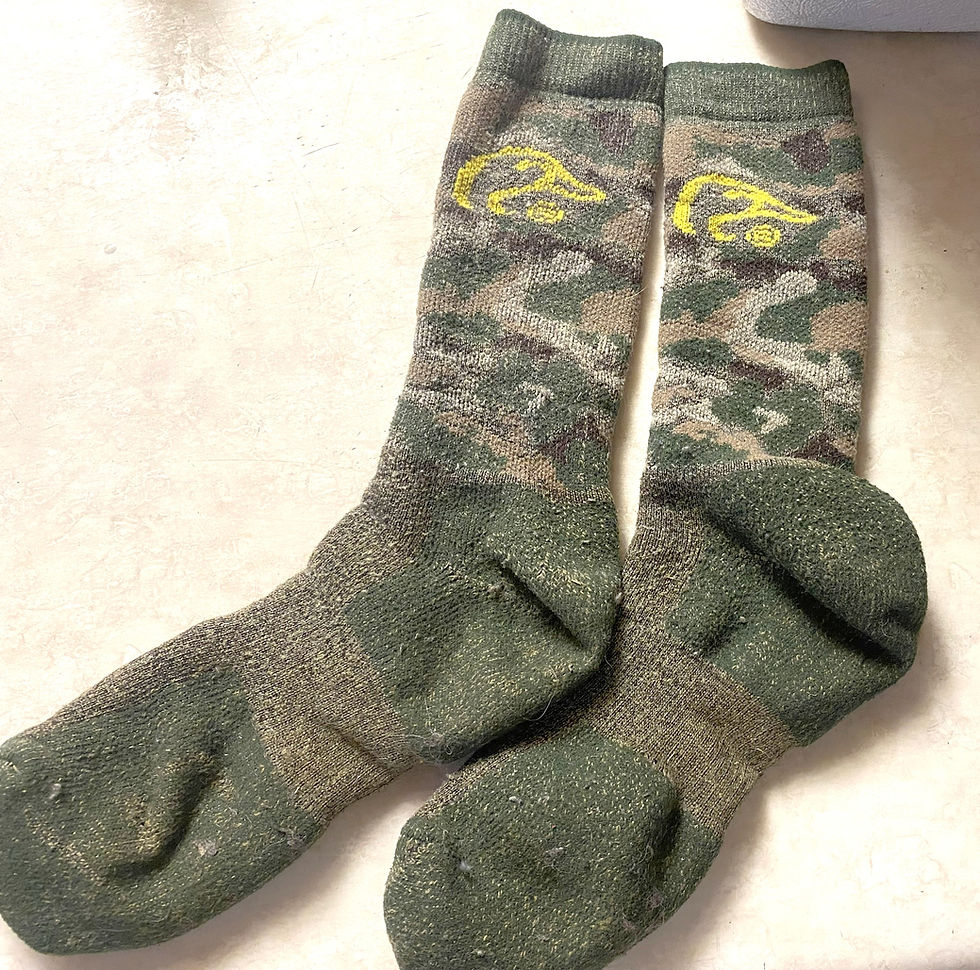
The socks we wear are the ones in the photo above: Ducks Unlimited camo-patterned wool-blend work socks with reinforced toes and heels.
Yes, wool, in Las Vegas. We were skeptical too. They’ve held up through hundreds of removals and hive inspections, from rooftops in Henderson to swarm rescues out in North Las Vegas.
The camo print, however, has not helped us hide from a single bee. We checked.
Nobody has ever complimented our socks on a job. We’ve stopped expecting it. But anyone who has spent a long afternoon on a hot roof knows your feet are doing more work than they get credit for, and when they’re miserable, the rest of you follows. If your feet aren’t feeling good, neither are you.
Dear readers, we are not affiliated with Ducks Unlimited in any way, so this, as usual, is a completely honest and unbiased review.
Why Socks Deserve More Attention in Beekeeping
Beekeeping puts your gear to the test. We stand for hours, walk over uneven ground, climb ladders, and work in the middle of August when the asphalt feels like a stovetop. Your feet take the punishment first, and they do it without complaint, which is more than we can say for the rest of us.
Cheap socks fail in predictable ways. Sweat builds up and turns into blisters and hot spots. Thin cotton slides down and bunches up inside the boot, and every bunch becomes a friction point by noon.
Synthetic-only blends trap heat and moisture, which brings odor and discomfort, and over enough time can invite foot problems nobody wants to explain to their doctor.
The last thing a beekeeper needs is to spend the evening treating a rash or blisters, or to be replacing worn-out socks every few weeks. We’ve done the replacing. It is not a hobby we recommend.

What Makes a Good Beekeeping Sock
After hundreds of removals and long summer hive checks, we’ve landed on five things that make a good beekeeping sock.
Start with the material. Merino or heavy-duty wool wicks moisture naturally and helps regulate temperature, so even at 100°F your feet tend to stay drier and cooler than they would in cotton. We know how that sounds. We were skeptical too, right up until we wore them.
Fit comes next. A snug, supportive compression fit has made a noticeable difference in how our feet feel after a long removal or a full day of hive checks. Loose socks look comfortable in the store and betray you by lunchtime.
Reinforced heels and toes matter because those are the first spots to wear thin. The extra material makes the socks last longer and keeps your skin from rubbing against boot seams. Socks without it tend to develop holes, and then opinions.
Height is a safety issue. We go with mid-calf, because the pant legs either get tucked into the socks or the socks get pulled up over the cuffs. Either way, it keeps bees from crawling up your leg, a lesson every beekeeper only needs to learn once.
Color and pattern are the last consideration. Camo might look like a style choice, but darker or patterned socks hide dirt, wax, and propolis stains far better than light colors. Propolis does not come out of white socks. We have the evidence.

How We Use Them in the Field
At Vegas Bees, our days often start before sunrise and stretch well past sunset, so we keep our gear practical and comfortable. Here’s how we manage our socks during a busy beekeeping season.
On hot days, we sometimes wear a thin liner sock under the heavy-duty pair. It cuts down on friction and helps prevent blisters. It also means putting on two socks per foot at 4:30 in the morning, which is its own kind of commitment.
We keep three or more pairs in rotation and air them out between uses. Wool can go multiple wears before washing as long as it dries completely. We have found that “completely” is the word doing all the work in that sentence.
Boots matter just as much. Even the best socks can’t save you if your boots don’t breathe, so we stick with leather boots that have vented panels or mesh linings to keep our feet cool. No foot has ever thanked anyone for choosing the unventilated option.
Finally, we wash wool socks on a gentle cycle and let them air dry. High heat breaks down the fibers and shortens their lifespan, and we’ve already covered how we feel about replacing socks every few weeks.
Final Thoughts
Every piece of beekeeping gear has a purpose, and socks are no exception. Whether we’re performing a live removal or tending our apiary, what we wear on our feet affects how long we can stay focused and comfortable in the field.
A few pairs of high-quality socks might seem like a minor investment. In our experience, it’s one of the easier upgrades to notice. Our feet stay drier, our focus holds up longer, and the days are far more enjoyable. Nobody expects socks to improve their mood. They do.
At Vegas Bees, we’ve tested a lot of products in real-world conditions, and when something works, we stick with it.
Our Camo Ducks Unlimited Tall Boot Socks have earned their place alongside our veils, gloves, and hive tools as essential gear for every removal and inspection.
They are not cheap socks, but the quality and comfort have been well worth the price for us and our feet. We have never once been tempted to go back to the cheap ones. Give them a try and let us know if you agree or disagree with our review.
Betsy & Pete
🐝Las Vegas’s All-Natural Live Bee Removal Team
About Us: The Authors

We’re Betsy Lewis and Pete Rizzo, Beekeepers on a Mission in Las Vegas
We’re not just in the bee business, we’re in the bee-saving business. Trained by a master beekeeper and backed by hundreds of successful removals, we rescue and relocate honey bees with care and precision.
If bees have moved into your wall, yard, or block wall, our live bee removal covers Las Vegas, Henderson, Summerlin, North Las Vegas, Boulder City, and the rest of Clark County. A cluster hanging from a tree or fence is a job for our bee swarm removal, and if you’re not sure what you’re dealing with, see how our free bee removal works.
Every swarm we save and every hive we manage reflects our deep love for the bees. At our Joshua Tree Preserve, we care for dozens of thriving hives, some wild, some honey-bearing, all part of our commitment to ethical, sustainable beekeeping.
Why Vegas Bees? Because We Never Stop Learning or Caring
Beekeeping keeps evolving, and so do we. We keep up our education, compare notes with fellow beekeepers, and refine our techniques so bees and people both come out ahead.
We also support the beekeeping community with high-quality beekeeping supplies. If you’re ready to suit up and start your own journey, we’ve got what you need.


